Apply Now

Department

Overview

The Department of Physiology, established in 1995, has evolved significantly over the years, expanding its MBBS seat capacity from 50 to 150 by 2022. The department also offers MD, MSc, and PhD programs, with a current intake of 5 seats each for MD, MSc, and PhD.

A key focus of the department is yoga and respiratory physiology, promoting research and education in these areas. This includes targeted research initiatives, sensitization programs, and new educational modules for MBBS students, along with celebrations like International Yoga Day to encourage health awareness.

In addition to academics, the department actively engages with the community through medical camps and awareness campaigns on important issues such as gender sensitization and inclusivity. With a balanced teaching approach that combines traditional methods and modern e-learning resources, the department fosters a dynamic educational environment.

The state-of-the-art amphibian simulation lab enhances the practical understanding of physiological concepts, providing hands-on experience with advanced techniques such as nerve conduction velocity and ECG demonstrations. This comprehensive approach prepares students for successful careers in the field of physiology.

Vision Mission

Vision:

  • To impart knowledge and hands-on skills to medical students while fostering an environment of research for students, faculty, and all medical professionals.

Mission:

  • To provide a dynamic educational and research environment for students, utilizing the latest techniques and technologies, and encouraging curiosity and innovative learning methods. This will empower young students to develop into skilled medical professionals or passionate research enthusiasts.

HOD

Qualifications: MBBS, MD (Physiology)
Work Experience: More than 19 years of experience

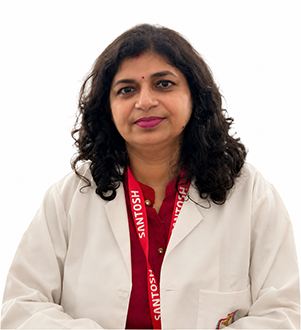
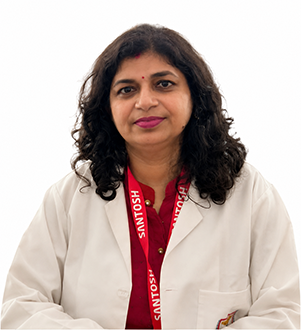
Dr. Rinku Garg is a distinguished Professor and Head of the Department of Physiology at Santosh Deemed to be University, bringing over 19 years of rich expertise in medical education, research, and academic leadership.

With an unwavering commitment to institutional growth, Dr. Garg excels in delivering a comprehensive physiology education while fostering a culture of academic excellence, teamwork and innovation. As the leader of the department, she has played a pivotal role in strengthening the discipline, combining traditional teaching values with cutting-edge advancements. Her guidance has nurtured both the academic knowledge and the core passion of numerous undergraduate and postgraduate students, preparing them to excel as future medical professionals.
 

Academic Interest & Core Expertise: 

  • Neurophysiology: Specializes in the intricate study of the nervous system, driving significant contributions through targeted teaching, high-impact research, and interdisciplinary collaborations.

Leadership & Distinguished Achievements:

  • Holder of several prestigious copyrights and patents, reflecting a high level of innovation and creativity in both research methodology and educational tools.
  • A prolific researcher with a track record of publishing more than 75 research papers in esteemed national and international indexed journals.
  • Successfully guided and mentored numerous undergraduate and postgraduate research projects, fostering curiosity and scientific temper among students.
  • Championed a collaborative culture within the faculty, upgrading the departmental standards to match modern global medical competencies.
  • Served as Internal and External Examiner for various Undergraduate (MBBS), Postgraduate (MD) and Allied Health Sciences examinations across different universities and institutions.
  • Invited as Resource Faculty/Speaker at numerous national and state-level conferences, Continuing Medical Education (CME) programs, workshops and academic events.
  • Chaired multiple scientific sessions at conferences, CMEs, and professional academic meetings.
  • Organized and coordinated several state-level workshops, symposiums, CMEs, and faculty development programs in the field of Medical Physiology and Medical Education.
  • Recipient of  award and prizes in recognition of academic excellence, research contributions
  • Actively involved in curriculum development, assessment and academic quality assurance activities.
  • Successfully guided several MD dissertations and PhD thesis, fostering research excellence and contributing to the academic and professional growth of postgraduate and doctoral students.
     

Thrust Areas

  • Advancing teaching methodologies and tools to enhance medical education
  • Conducting studies to better understand disease patterns and treatments
  • Investigating normal human body responses and its functional mechanisms
  • Partnering with other branches of medicine to study the functioning, defects, and potential resolutions of various health conditions

Team

Facilities

Clinical Focus:

  • Ensuring a comprehensive teaching approach through both horizontal and vertical integration, making theoretical knowledge relatable to clinical scenarios
  • Encouraging undergraduate students to undertake research projects on clinical topics to increase sensitivity towards real-world medical issues
  • Teaching essential skills such as history taking, general physical examination, specific systemic examination
  •  Introducing students to key medical tools from the first year, including Sphygmomanometer, Stethoscope, Reflex hammer, Spirometer, ECG machine & Exercise stress testing
  • Providing training in hematological procedures to enhance clinical expertise and practical skills for future medical practice

Research

The department is well-equipped with advanced laboratories to support both teaching and research. Key facilities include:

1. Human/Clinical Physiology Laboratory:

  • Blood Pressure measurement
  • Examination of various body systems
  • Exercise physiology studies
  • Spirometry and respiratory assessments

2. Haematology Laboratory:

  • Red Blood Cell count
  • White Blood Cell count
  • Differential Leucocyte count
  • Hemoglobin estimation

3. Postgraduate Research Laboratory:

  • Electrocardiogram (ECG) testing
  • Basal Metabolic Rate (BMR) assessments

4. Mammalian/Amphibian/Simulation Laboratory:

  • Frog nerve-muscle preparation experiments
  • Mammalian heart study facilities
  • Use of simulation software for teaching amphibian and mammalian physiology

Events

  • Free Workshop on Nerve Conduction Study for BPT students
  • Organised interdepartmental e -symposium
  • Organised guest lectures 
  • organised debate
  • Organised CME-(Organised Secretary) Holistic approach to pain
  • Organised guest lecture (Organised Secretary) On Darwin day
  • Organised CME-(Organised Secretary) on Tuberculosis
  • Organized interbatch and intrabatch quiz
  • Organized interdisciplinary CME
  • Organized poster competition